Cyber News / Article / PHP2Shell: How to Protect Your Server | Kaspersky official blog

PHP2Shell: How to Protect Your Server | Kaspersky official blog
PHP developers have released patches for two critical vulnerabilities that could allow an attacker to remotely execute arbitrary code on the server without authentication.
Editorial Team
October 21, 2026
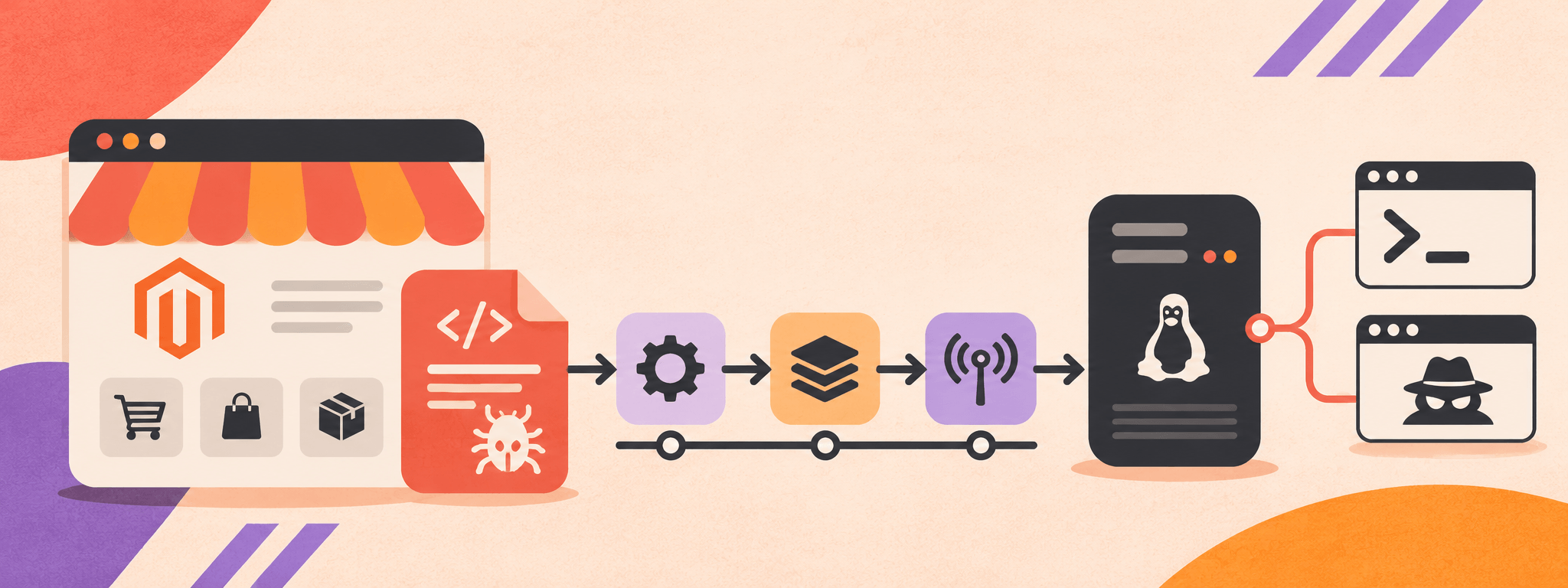
Two critical vulnerabilities have been discovered in the popular PHP programming language. The vulnerabilities, identified asCVE-2026-109618andCVE-2026-109619, allow attackers to remotely execute code on a server running PHP without authentication. The language’s development team has released updates for all supported branches, but the first attempts to exploit the vulnerabilities were observed even before the patches were published. The exploit has been named PHP2Shell.
The architectures of popular marketplaces, e-commerce platforms, and learning management systems (LMS) are written in PHP. In addition, PHP is used in various content management systems (CMS) such as WordPress, Drupal, Joomla, and so on, which power most websites on the internet.
In this blogpost, we discuss CVE-2026-109618 and CVE-2026-109619 in detail, and explain how companies can protect their infrastructure. Readthe Securelist expert blogto learn how events surrounding these vulnerabilities unfolded before the patch was released.
According to PHP web site, versions prior to 8.2.35, 8.3.36, 8.4.27, and 8.5.12 are vulnerable to CVE-2026-109618 and CVE-2026-109619. There are no official fixes for older branches. According to unofficial reports, the vulnerabilities also affect PHP versions starting with 5.4.0.
Both vulnerabilities received a score of 9.2 on the CVSS v4.0 scale. They arise because, after a request is interrupted (for example, due to a memory shortage), PHP leaves invalid data in the memory buffer, and subsequently accesses it, allowing code to be executed on the server. One of the confirmed attack chains via CVE-2026-109619 exploits the `session.upload_progress` mechanism (which tracks file upload progress), which is enabled by default in PHP.
By exploiting these vulnerabilities, attackers can remotely execute code on the server with web server process privileges without authentication.
According to PHP developers, all installations of unpatched versions that process web requests are at risk, including PHP-FPM, Apache with mod_php, php-cgi, FrankenPHP, and LiteSpeed. The greatest risk lies with mod_php: researchers demonstrated an exploit for it in which an unauthenticated request triggers the attack even before the application code is executed.
We’ve compiled key recommendations from the PHP developers and experts at Kaspersky.
Only the immediate installation of patches will fully resolve the issue, but if that isn’t possible, it’s recommended to implement temporary measures. PHP developersprovidestep-by-step instructions for each vulnerability.
AI has learned how to quickly gather scattered details about a person, link their accounts together, and turn a digital footprint into a detailed dossier. We look at how artificial intelligence is changing doxing — and what you can do to make deanonymization harder.
AI has learned how to quickly gather scattered details about a person, link their accounts together, and turn a digital footprint into a detailed dossier. We look at how artificial intelligence is changing doxing — and what you can do to make deanonymization harder.
Ekaterina Murlykina
October 20, 2026
We break down how to use e-books safely, and which rules to follow when searching for books online, so you don’t fall victim to scammers
We break down how to use e-books safely, and which rules to follow when searching for books online, so you don’t fall victim to scammers
Oxana Frolova
October 30, 2026
How a certificate’s private key ended up being equal to 4, and why browser updates alone won’t protect you from vulnerable eMudhra certificates.
How a certificate’s private key ended up being equal to 4, and why browser updates alone won’t protect you from vulnerable eMudhra certificates.
Stan Kaminsky
October 28, 2026
Let’s look at how to use AI as a resume editor without oversharing to build a document that gets past automated screening systems and catches a recruiter’s eye.
Let’s look at how to use AI as a resume editor without oversharing to build a document that gets past automated screening systems and catches a recruiter’s eye.
Lama Saqqour
October 15, 2026
University students sometimes don’t see the practical value of what they’re studying, and aren’t always sure what to do next. Kaspersky Academy’s free “Cybersecurity. Entry Level” course can help them pick up in-demand skills directly from Kaspersky experts.
University students sometimes don’t see the practical value of what they’re studying, and aren’t always sure what to do next. Kaspersky Academy’s free “Cybersecurity. Entry Level” course can help them pick up in-demand skills directly from Kaspersky experts.
Maxim Baybarin
September 30, 2026
Related articles
Is Your SOC Ready for AI Agents? A Maturity Check Before You Deploy
3 days ago
A Shared ChatGPT Link Could Run Attacker Code in Your Session and Read Private Chats
5 days ago
Official Claude Code Extension on Cursor Marketplace Trojanized with Persistent SSH Backdoor
6 days ago
You might Also like
Google Dismantles 1.3 Million Device XCPE Botnet, Bans Android TV Maker Over Preinstalled Malware
Chinese hackers use ARTEX AI in automated attacks against 200 orgs